Social Psychology · Consumer Insight
The Psychology of Near-Expired Food
A consumer behaviour literature review examining why shoppers hesitate at the discount shelf — and how retailers can change that.
Desk Research · Literature Review Social Psychology · NCKU 2024 TPB · ELM · Cognitive Dissonance ESG · SDG 12.3
8–10%
of global human-caused greenhouse gas emissions come from food loss & waste
State of Climate Action, WRI 2023
170kg
of food wasted per person per year in Taiwan — 60% from the consumer end
Asia-Pacific Food Loss Database, 2011
250tonnes
of food waste reduced monthly by FamilyMart Taiwan after launching near-expiry discounts
翻轉教育, 2021
Food waste is not only an environmental issue — it is a market failure. Retailers produce surplus that cannot be sold at full price, and consumers walk past discounted near-expired products out of hesitation. The gap between these two realities is a psychological one. This study uses social psychology frameworks to map the consumer's decision-making process at the discount shelf, and translates those findings into actionable strategy for the retail sector.
// The Psychological Tug-of-War
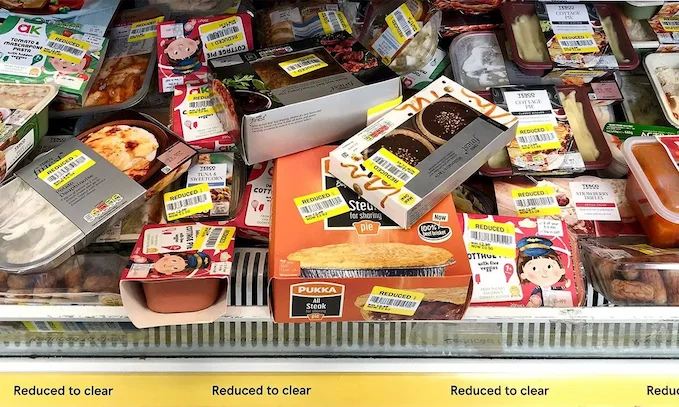
Every consumer standing in front of a near-expiry shelf is running two simultaneous calculations: "Is this safe?" and "Is this worth it?" The discount that retailers use to solve their inventory problem can simultaneously trigger both reassurance and suspicion. Understanding which psychological levers tip the scales — toward purchase or avoidance — is the central challenge for any retailer building a food waste reduction strategy.
Price Sensitivity & AnchoringWhen discount percentages are fixed and visible (e.g. 30% off), consumers compare against the original price and experience a "bargain" gain — increasing purchase probability.
Green Identity & Moral LicenceFraming the purchase as an environmental act ("save food, save the planet") reframes "bargain-hunting" into a socially admirable behaviour, resolving internal conflict.
Scarcity & Time PressureNear-expiry windows create a natural urgency cue. Consumers who perceive food as scarce resources are more likely to act before the opportunity disappears.
Quality Devaluation SignalHeavy discounts act as a peripheral cue triggering the thought "something must be wrong with this" — regardless of actual quality. The deeper the discount, the stronger this effect.
Social Stigma PressureConsumers fear being perceived as unable to afford full-price goods, or as taking health risks. This subjective norm suppresses purchase intent even when the individual is personally willing.
Expiry Date MisreadingMost consumers conflate "best before" with "unsafe after" — treating the label as a hard cutoff rather than a quality guideline. Proximity to the date signals risk, not opportunity.
TPB
Theory of Planned Behavior
Ajzen, 1991
Attitude · Norms · ControlPsychological Mechanism
Purchase intention is jointly determined by three forces: the consumer's personal attitude toward the product, the subjective norms (what others think), and their perceived behavioural control (confidence in making the decision). For near-expired food, all three can simultaneously work against purchase.
Market Implication When a consumer believes peers would judge them for buying discounted food (negative subjective norm), their purchase intent drops — even if they personally find the product acceptable. Retailers must address the social perception, not just the price.
ELM
Elaboration Likelihood Model
Petty & Cacioppo, 1986
Central · Peripheral RoutesPsychological Mechanism
Consumers processing information under low involvement take the peripheral route — relying on simple cues rather than careful analysis. A large discount label becomes one such peripheral cue: instead of evaluating the product's actual quality, the consumer shortcuts to "cheap = inferior."
Market Implication Packaging and shelf design must actively counteract the peripheral cue effect. Displaying original price clearly, using quality assurance language, and reducing visual "clearance" framing can shift consumers toward the central route — where they actually evaluate the product.
CDT
Cognitive Dissonance Theory
Festinger, 1957
Belief · Behaviour ConflictPsychological Mechanism
When a consumer who values environmental responsibility hesitates to buy near-expired food, they experience cognitive dissonance — their environmental values clash with their food safety anxiety. To resolve this tension, they either change their belief ("maybe it's fine") or their behaviour (walk away).
Market Implication Retail messaging that explicitly frames the purchase as an environmental act gives consumers a ready-made justification to resolve their dissonance in favour of buying. "Saving food" becomes a moral achievement, not a compromise.
Retail Case Study · Taiwan Convenience Store Chains
How Taiwan's major chains operationalised food waste reduction
FamilyMart 全家
友善食光 · Friendly Food Hours
Launched May 2019. Fresh food within 7 hours of expiry automatically discounted. Applied across ~4,000 stores nationwide. Leverages CDT: positions buying as an act of environmental responsibility.
7-Eleven 統一
i珍食 · i Cherish Food
Fixed-ratio discount on near-expiry fresh items. Clear price comparison labelling (original vs. discount) activates anchoring effect and reduces ELM peripheral-cue suspicion by emphasising value, not distress.
Hi-Life 萊爾富
惜食食堂 · Cherish Food Canteen
Combines discount with sustainability narrative in naming — "canteen" evokes community sharing rather than clearance, directly addressing the social stigma barrier identified in TPB.
OK Mart
Near-Expiry Discount Programme
Part of the industry-wide response to SDG 12.3. Standardised discount timing and percentage create consumer habit formation — repeated exposure reduces perceived risk over time.
Measured Outcome: FamilyMart's programme alone reduces approximately 250 tonnes of food waste per month — equivalent to 2.27 million rice ball-sized portions. This demonstrates that psychological reframing + price incentive, when applied at scale, produces measurable behavioural change without requiring a change in fundamental consumer values.
05Strategic Recommendations 01
Reframe the Narrative — from "Clearance" to "Mission"
Applies: CDT + TPB (Subjective Norm)
Replace "discounted" language with purpose-driven framing ("Rescue this meal", "Climate-friendly choice"). This shifts the social meaning of purchase from "budget constraint" to "environmental agency", resolving cognitive dissonance and improving perceived social standing.
02
Anchor the Price Visually — Always Show the Original
Applies: ELM (Peripheral Cue Disruption) + Price Anchoring
Display original price prominently alongside the discount price. Add quality assurance text ("Quality unchanged · Best before [date]"). This activates the central route of ELM and counters the automatic "cheap = bad" heuristic triggered by large discounts.
03
Educate on Expiry Date Literacy at Point of Purchase
Applies: Health Risk Misperception (Newsome et al., 2014)
Brief shelf-level messaging distinguishing "best before" (quality peak) from "use by" (safety limit) can significantly reduce health anxiety as a purchase barrier. App-based explanations at checkout can reinforce this habit formation over repeated visits.
04
Standardise Discount Timing to Build Predictable Consumer Habits
Applies: Behavioural Conditioning + Price Sensitivity (Liu, 2018)
Fixed discount windows (e.g. last 7 hours before expiry, always at the same percentage) allow price-sensitive consumers to plan around them. Predictability reduces perceived risk and builds routine — the most durable form of behavioural change.
06Proposed Primary Research // From Literature Review → Research Design
What this desk research cannot answer — and how I would answer it next
This literature review surfaces the psychological mechanisms behind near-expired food purchase behaviour — but it cannot tell us which mechanism dominates for specific consumer segments in Taiwan's convenience store context. A primary research study is needed to quantify decision weights and identify the highest-leverage intervention points.
Target Segments
University students & working adults who rely on convenience stores for weekday meals (highest near-expiry exposure frequency)
Key Research Questions
At peak discount hours (e.g. after 8pm), what weight do consumers assign to: price vs. remaining shelf life vs. flavour preference vs. brand?
Strategic Output
Help retailers predict optimal discount timing, percentage thresholds, and messaging copy that maximises sell-through without eroding brand quality perception
Quantitative Survey (n ≥ 100) Qualitative In-depth Interviews Mixed-Methods Design Conjoint Analysis Segment Profiling
// So What
"The problem is not that consumers don't care about food waste. The problem is that retailers have been solving it with price alone — and price is only one of three psychological levers."
This study shows that attitude, social norm, and perceived behavioural control (TPB) must all be addressed simultaneously for near-expiry programmes to reach their potential. Taiwan's convenience store chains have made strong progress — but the next frontier is
personalisation: understanding which consumer segments respond to economic framing vs. environmental framing vs. social identity framing, and designing communications accordingly. That is the question a well-designed primary study can answer.