Beuchet Chair Illusion
Inspiration
Where creativity meets perception
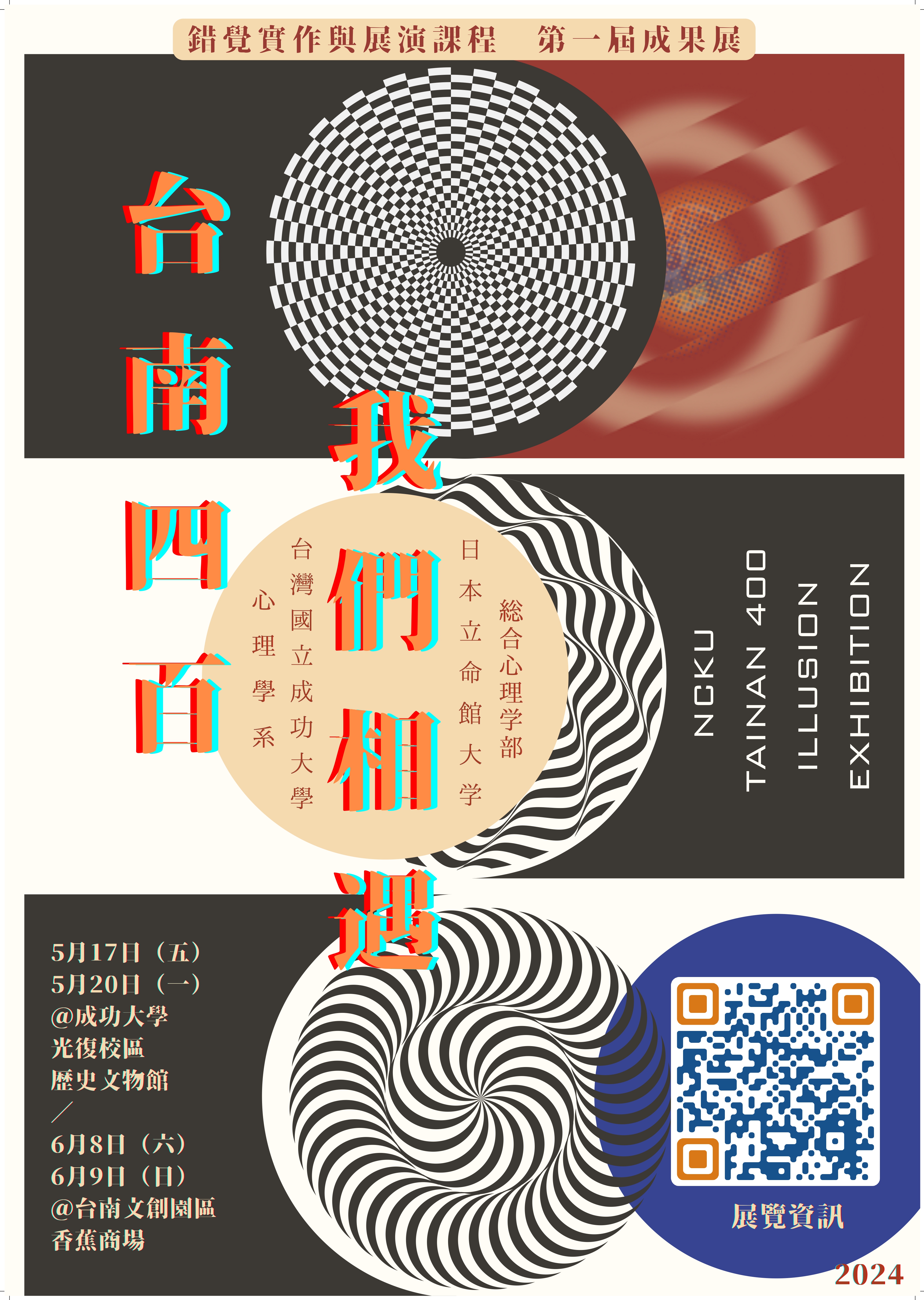
The project draws inspiration from "Tainan 400, Here We Meet", a celebration of Tainan's four centuries of cultural and historical fusion.
I was inspired by how the Beuchet Chair Illusion challenges perception — just as Tainan's identity intertwines past and present, illusion and reality.
Since the project required an interactive and visually striking design that could leave a strong impression on viewers, our instructor encouraged us to explore perceptual experiences.
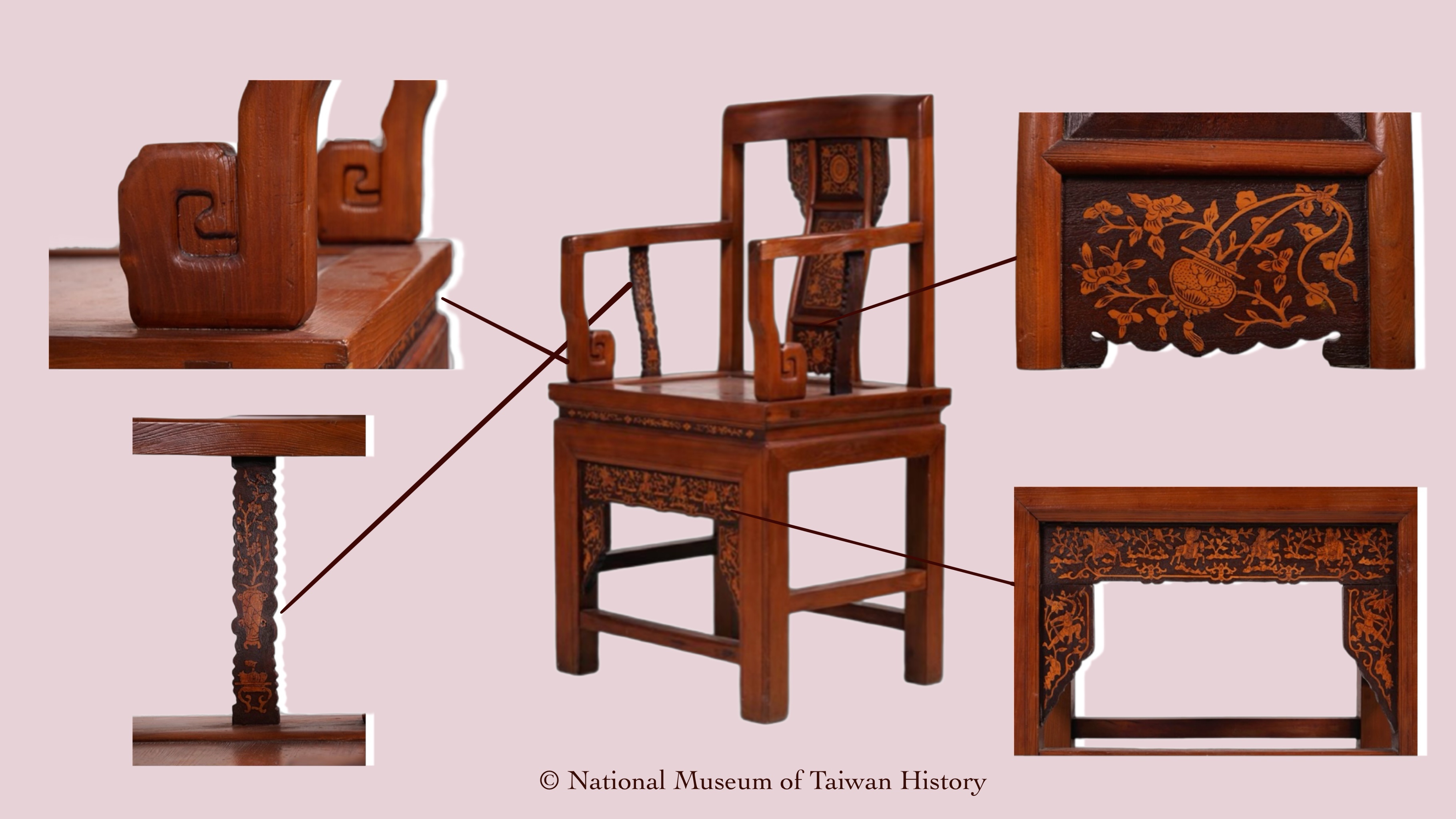
After studying various interactive artworks, I decided to reinterpret the concept of illusion through the traditional "Chair 400."
"The design incorporates symbolic elements from Bischofia javanica and Punica granatum — two species deeply rooted in Tainan's 400-year heritage — combined with local wood inlay and carving craftsmanship to express the city's enduring cultural essence."
Research Foundation
To better understand the mechanism behind optical illusions, my research focused on three key references:
"Your Amazing Brain" Exhibition (2022)
An interactive neuroscience exhibition developed by the Welcome Centre for Integrative Neuroimaging at the University of Oxford and Banbury Museum & Gallery. It explored perceptual and optical illusions to demonstrate how the brain interprets scale, distance, and visual cues.
Jean Beuchet (1963)
The original study that introduced the Beuchet Chair illusion, analyzing how perceived distance affects apparent size. This research established the foundational principle behind the illusion used in this project.
Wiseman, R. (2016)
A contemporary reinterpretation of the Beuchet Chair illusion that refined viewing conditions and structural composition. This article inspired me to explore how the same perceptual principle could be adapted into a cultural context.
Experimental Process
From concept to reality
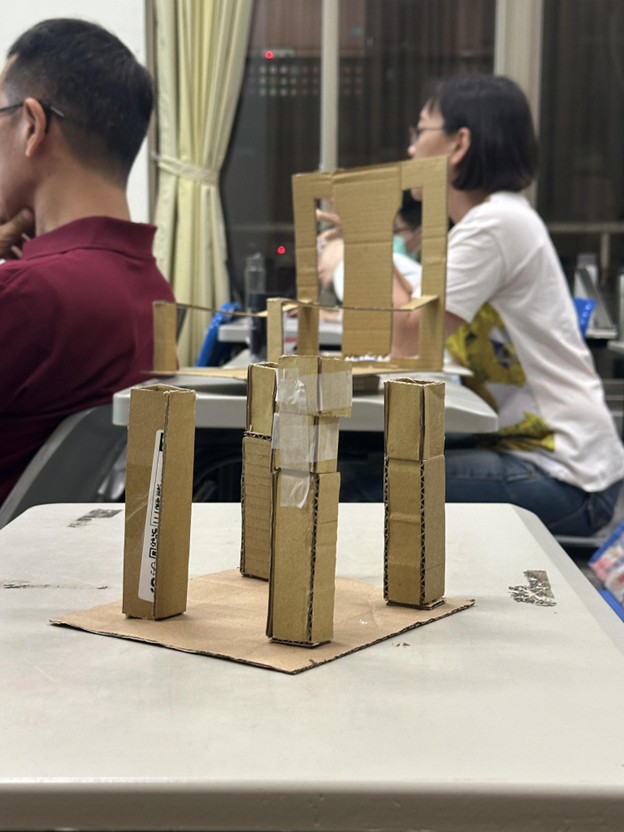
During this process, I realized that a few sources provided detailed measurements or structural data, which made the replication particularly challenging. I had to estimate proportions and test multiple viewing angles.
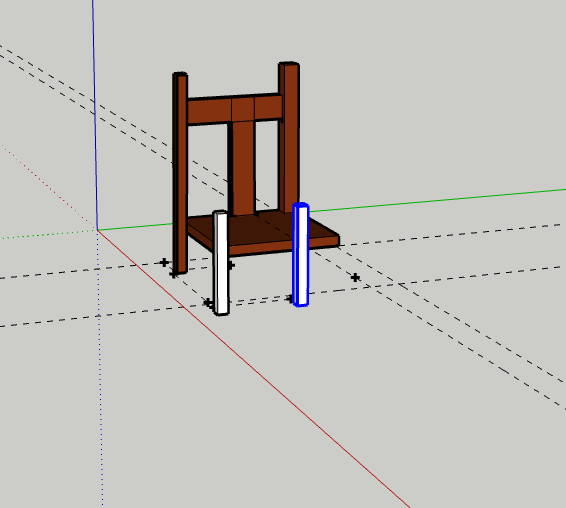
During the prototyping phase, I adjusted the chair's structure from four legs to three. Both versions could produce the illusion, but the three-legged form created a clearer and a more stable visual composition.
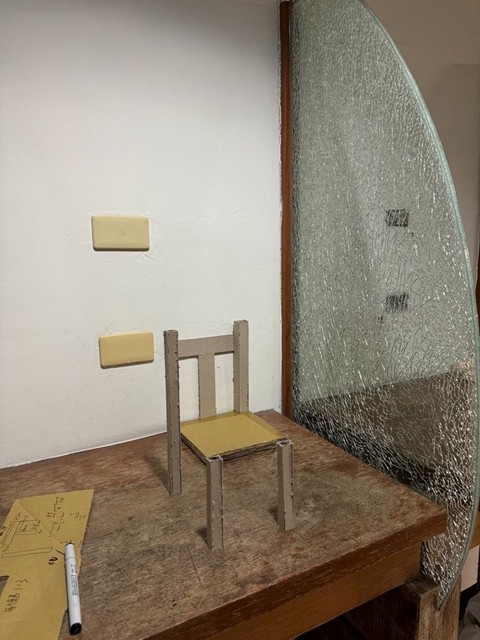
The final prototype was built and successfully recreated the Beuchet Chair illusion, proving the theoretical calculations were correct.
Result Phase
Campus Exhibition
17 May – 20 May 2024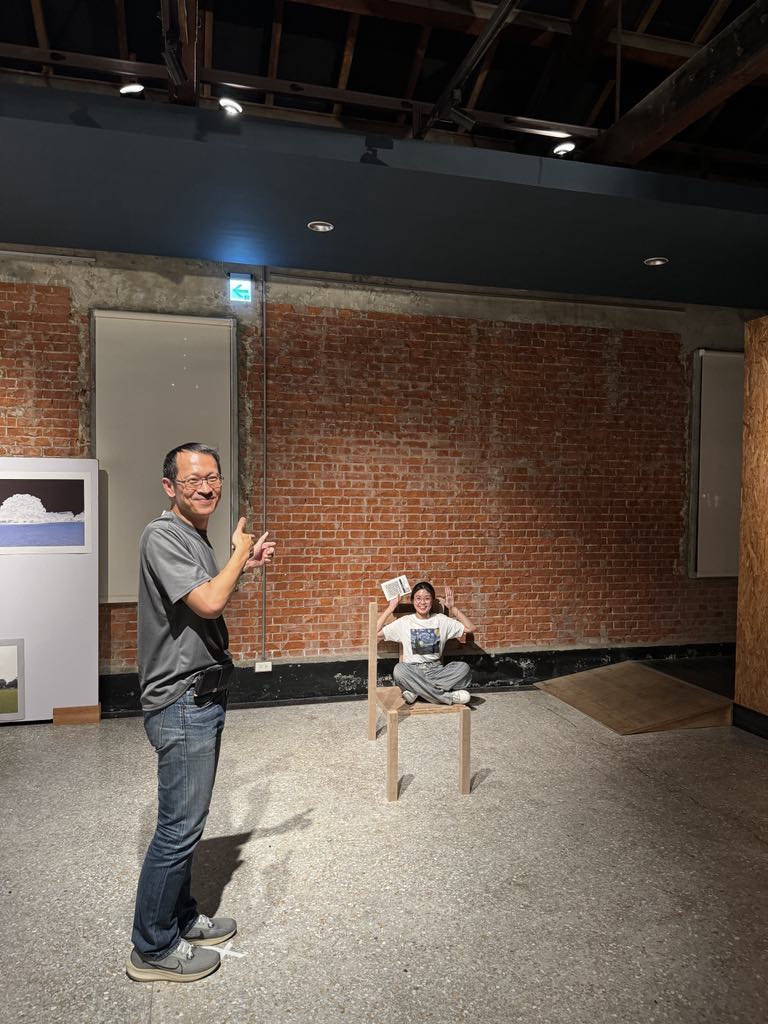
The absence of varnish slightly reduced the intended impact, yet the contrast between perceived form and visual perspective remained strikingly vivid.
Off-Campus / Final State
8 Jun – 9 Jun 2024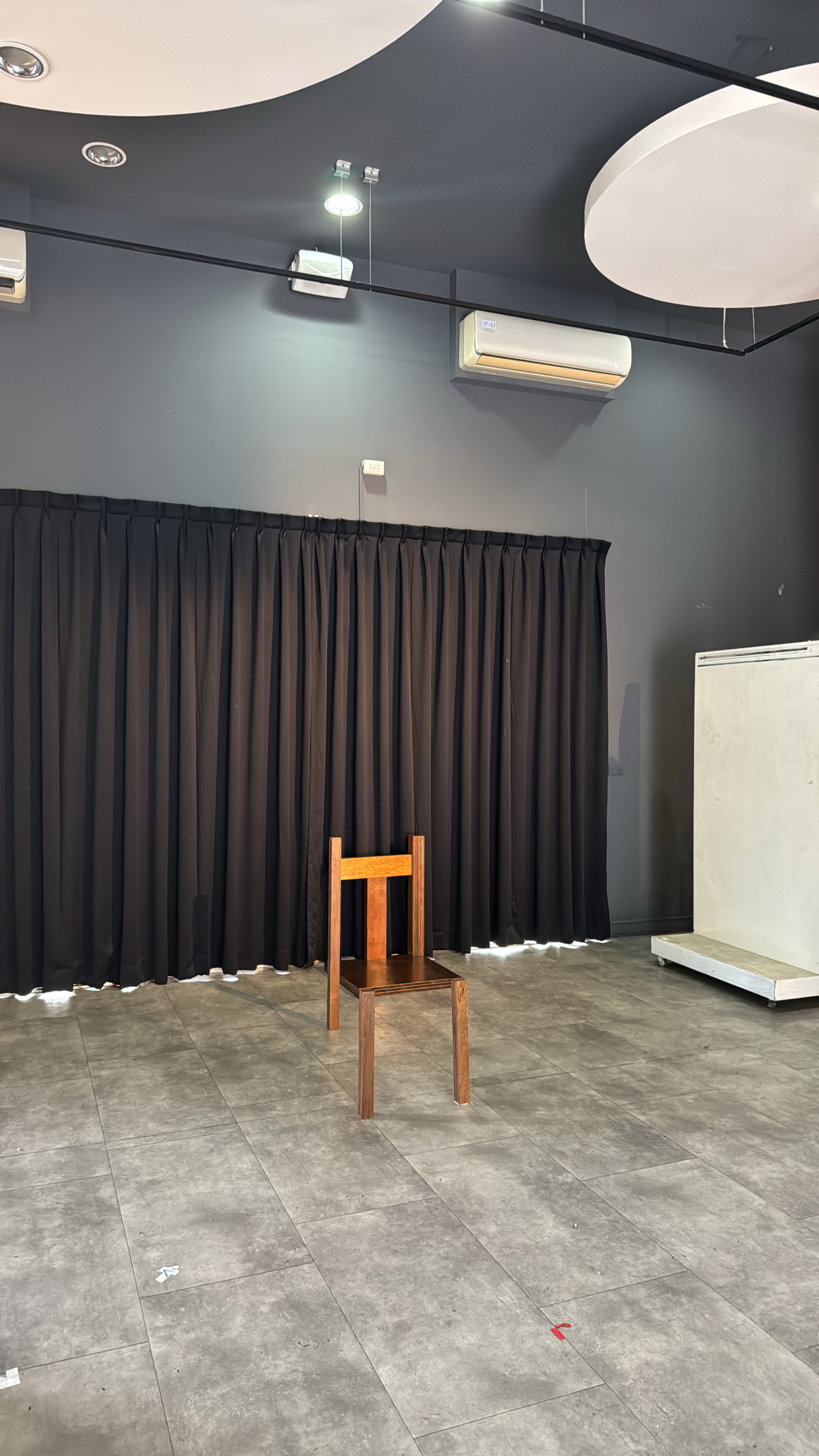
With limited time and budget, I explored alternative material strategies to evoke the visual depth of traditional carved furniture rather than reproducing intricate carvings directly.
Design Reflection: The Beuchet Chair
👁️ How to view
Interact with the model:
Slide or rotate the object to explore the structure.
Find the illusion:
View from a 45° angle at the correct distance to see the pieces align perfectly.
The Challenge
Initially, the lack of clear dimensional data and viewing angles made it difficult to determine where to begin. Online sources provided limited technical information, leaving much of the process reliant on trial and error.
Technical Breakthroughs
- Finding the Ratio: Through analyzing video footage, I discovered that a 1:3 scale successfully produced the intended illusion. (Future exploration: 1:2 scale or alternative angles).
- Structural Simplification: Refining the structure from four legs to three simplified the overall system, eliminating the need for complex chassis calculations.
Key Takeaway
This project highlighted the importance of adaptability and systematic experimentation when translating perceptual theory into physical form.